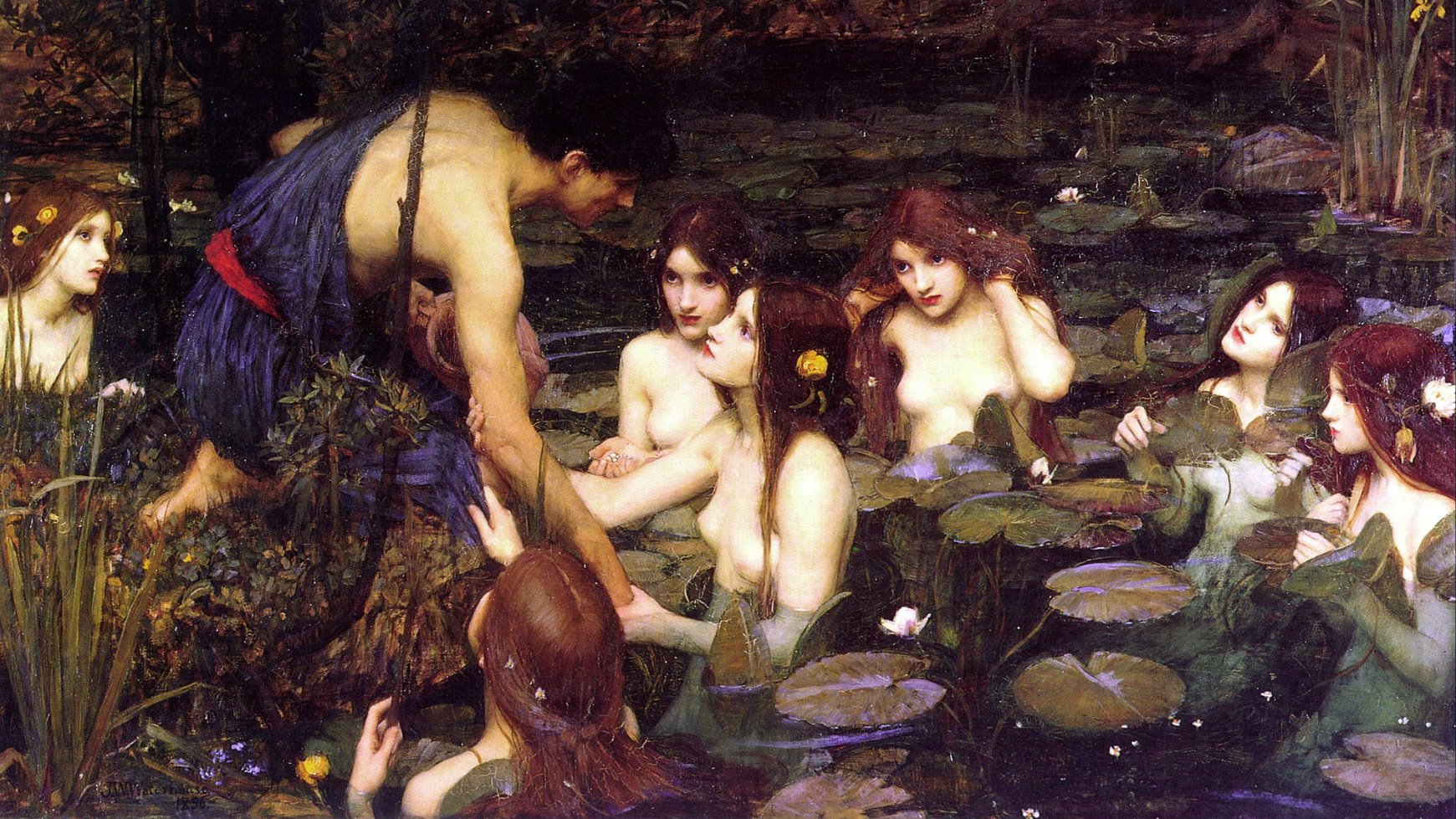
Hylas and the Nymphs
John William Waterhouse
1896. Oil on canvas. 132.1 x 197.5 cm. Manchester Art Gallery, Manchester, England.
A definitive masterpiece of late Pre-Raphaelite painting and the Aesthetic Movement, illustrating a poignant episode from Greek mythology during the Argonauts' expedition. Hylas, the youthful companion and beloved of Heracles, ventures ashore to fetch fresh water and encounters a secluded pool inhabited by Naiads (water nymphs). Captivated by his remarkable youth and beauty, the nymphs lure him into the lily-choked, glassy water, from which he disappears forever. Waterhouse brilliantly captures the eerie, hypnotic atmosphere of fatal seduction, juxtaposing Hylas's warm, muscular form against the pale, repetitive and hauntingly serene features of the seven nymphs emerging from the depths. The painting attracted widespread modern attention in 2018 when it was temporarily removed from display by the museum to provoke public debate surrounding censorship and the presentation of the female body in Victorian art.